

What rest rules are
When a call ends, the bot classifies it with a label: the outcome it closed with — “Busy”, “Doesn’t want to be contacted”, “Promised a date”, etc. For some of those outcomes it doesn’t make sense to call again right away. If the contact already said they don’t want to be called, insisting the next day adds nothing. A rest rule defines, for a label, how long the case stays out of campaigns before it can be contacted again. While a case is resting, the bot won’t call it even if it comes in a new campaign’s file.What you can do here depends on your permissions: with read permission you can see how each label is configured; with edit permission you can also create, modify and delete rules. If you need edit permission, talk to your Inceptia representative.
Where to see them
From Operations → Bots, open the bot you want to review and choose Rest rules in the side menu, next to Campaigns, Trends and Exports.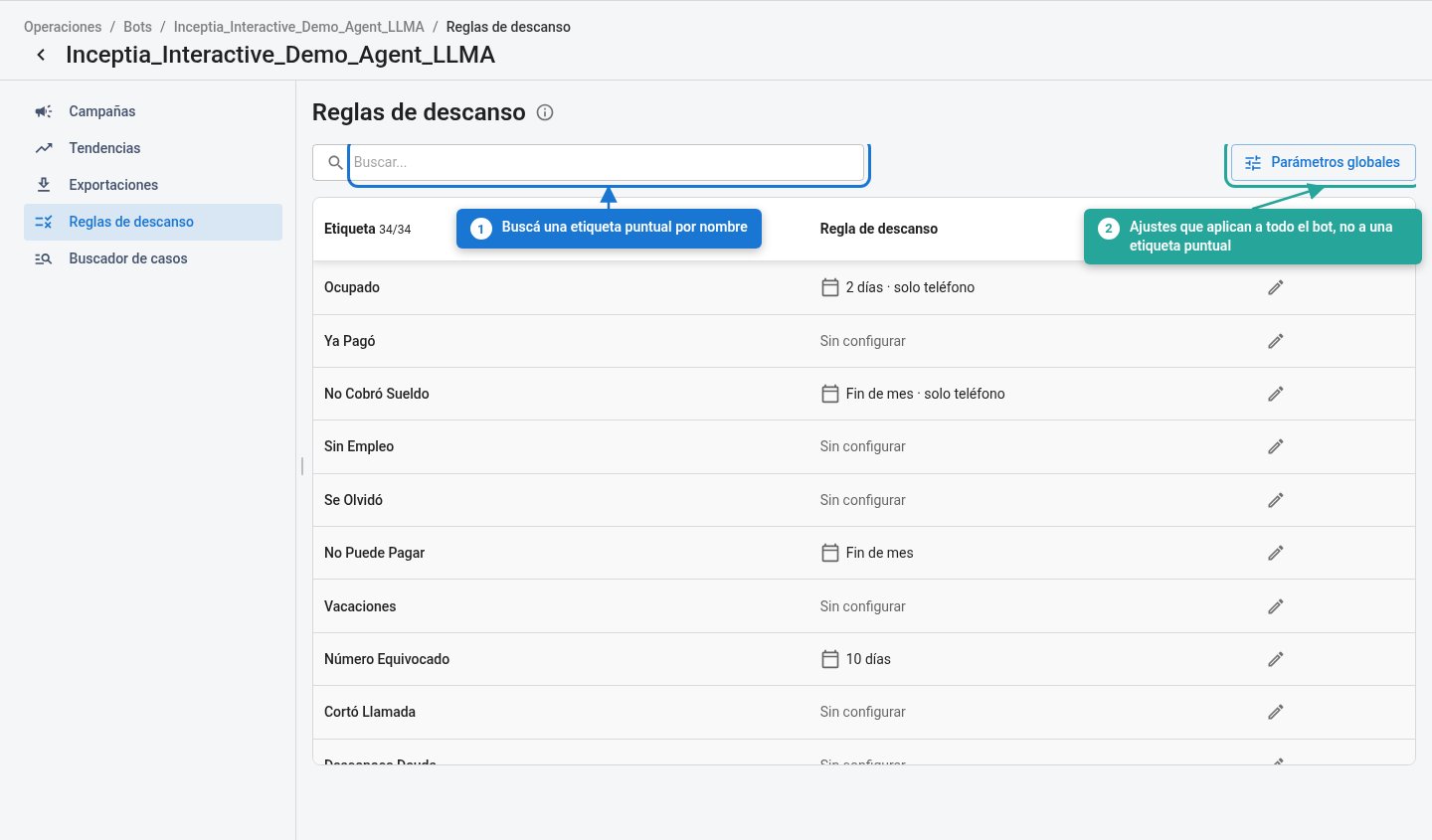
Not configured means that label doesn’t generate any rest: the case becomes available again as soon as the call ends.
The search box filters labels by name, useful when the bot has many. The Global parameters button opens the settings that apply to the whole bot rather than to a single label.
The labels the platform uses internally — delivery failures and the technical ones Calling, Undefined, Error and Recall — don’t appear in the list: they aren’t business outcomes, so they don’t carry a rule.
How to read a label’s rule
The pencil icon on any row opens the rule panel. If the label already had a rule, the panel opens preloaded with that configuration.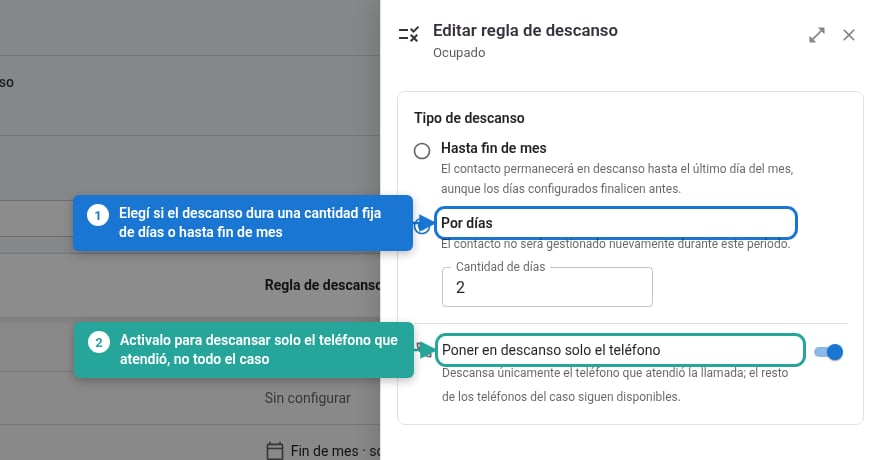
The rule takes effect once you confirm with Save changes.
Deleting a rule
Delete rule, inside the same panel, removes the rule and leaves the label as Not configured. From that moment on, cases ending with that label become available again as soon as the call ends.
The bot’s global parameters
Unlike per-label rules, these two settings apply to the whole bot.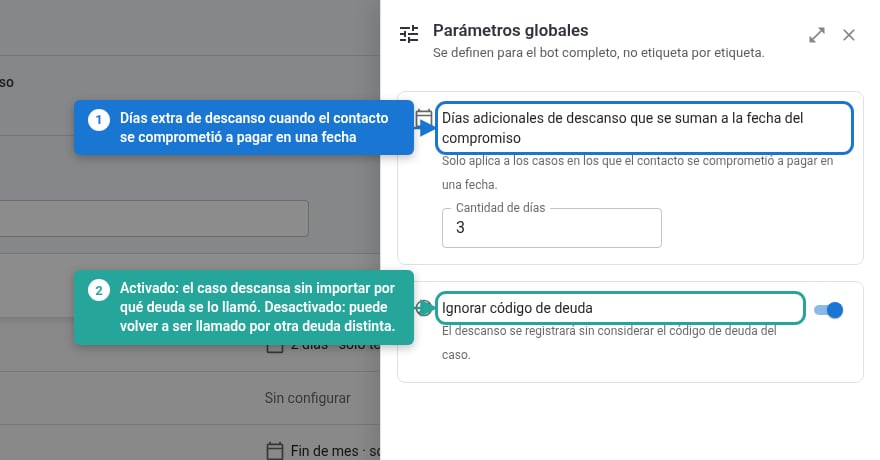
- On: the case rests regardless of which debt it was called about. It can’t be contacted again for any debt while the rest lasts.
- Off (the default behavior): the rest is tied to that specific debt, so the case can still be called for a different debt.
Don’t confuse this option with “phone only”: one limits the rest by debt, the other by phone number. They’re independent.
When changes take effect
Cases that were already resting when the change was made keep the rest they had until it expires.Resting cases through the API
A campaign’s detail includes theq_resting_cases field: the number of cases in that campaign that weren’t managed because they were resting. It’s the way to see the impact of these rules without entering the platform.